Sublingual absorption works by letting small molecules diffuse through the thin, capillary-rich mucosa under the tongue directly into the bloodstream. Because this route bypasses the stomach, intestines, and first-pass liver metabolism, nutrients can reach systemic circulation faster and in higher proportions than the same compound swallowed as a pill.
The Biology of the Oral Mucosa
The inside of your mouth isn't uniform. The tissue under your tongue (sublingual mucosa) and the lining of your cheeks (buccal mucosa) is a relatively thin, non-keratinized epithelium laced with a dense network of capillaries draining into the jugular vein. That anatomy is what makes the mouth a useful drug-delivery site: molecules placed on this surface can cross into the blood without transiting the gut.
By contrast, when you swallow a supplement, it goes through the stomach (acid, enzymes), the small intestine (where it must survive bile and pancreatic enzymes and be absorbed by enterocytes), and then the hepatic portal vein — which routes everything through the liver first. The liver's job is to detoxify, and it treats many nutrients and drugs as candidates for rapid breakdown. That's "first-pass metabolism," and it's the biggest reason oral bioavailability of many compounds is disappointingly low.
What Actually Absorbs Sublingually?
Not every molecule is a good candidate for oromucosal delivery. Three properties matter:
- Molecular size: Small molecules (under ~500 Da) diffuse more readily. Melatonin (~232 Da), B12 as methylcobalamin (~1,344 Da — still manageable), and vitamin D3 (~385 Da) can cross. Large proteins and antibodies cannot.
- Lipophilicity: Moderately lipophilic molecules pass lipid bilayers most efficiently. Highly water-soluble molecules need more help.
- Contact time: The longer the liquid sits under the tongue, the more absorbs. This is why sprays are instructed to be held, not immediately swallowed.
For a molecule that fits those criteria, the sublingual route can deliver a meaningful fraction of the dose to the bloodstream within minutes.
Why "Bypassing the Liver" Matters
The liver isn't the enemy — it's doing its job. But for supplementation, first-pass metabolism often means the labeled dose overstates what's actually available to your tissues. Published pharmacokinetic research has shown oral melatonin bioavailability in the low-double-digit percent range (Andersen et al., 2016), and the same kind of limitation affects many other orally administered compounds.
When you deliver a nutrient sublingually, it enters the systemic venous circulation and is distributed to tissues before the first hepatic pass. The liver still metabolizes it eventually — but on a later pass, at a slower rate, and only after some of the active molecule has already reached its target.
The Research Trail
Oromucosal drug delivery has been a serious pharmaceutical research area since the mid-20th century. Academic groups — including work at Harvard and associated hospitals in the 1990s — studied oromucosal kinetics and formulation strategies that informed today's sublingual tablets, films, and sprays. A 2023 pharmacokinetic comparison (PubMed 37438493) between oral and oromucosal melatonin formulations reported different absorption curves, reinforcing the mechanistic case for spray delivery. Broader review literature on buccal and sublingual drug delivery confirms the route's validity for suitable small-molecule actives (Patel et al., Journal of Pharmacy and Pharmaceutical Sciences; Narang & Sharma, 2011).
Sublingual vs Oral vs Injection
| Route | Bypasses liver first-pass? | Typical onset | Best for |
|---|---|---|---|
| Oral (swallowed pill) | No | 30–90 min | Robustly absorbed, heat-stable compounds |
| Sublingual spray | Yes (initial pass) | 5–30 min | Small, lipophilic-friendly molecules |
| Intramuscular injection | Yes | 15–60 min | Large molecules, depot dosing |
| Transdermal patch | Yes | Hours | Small, highly lipophilic drugs |
Why Oral Sprays Specifically?
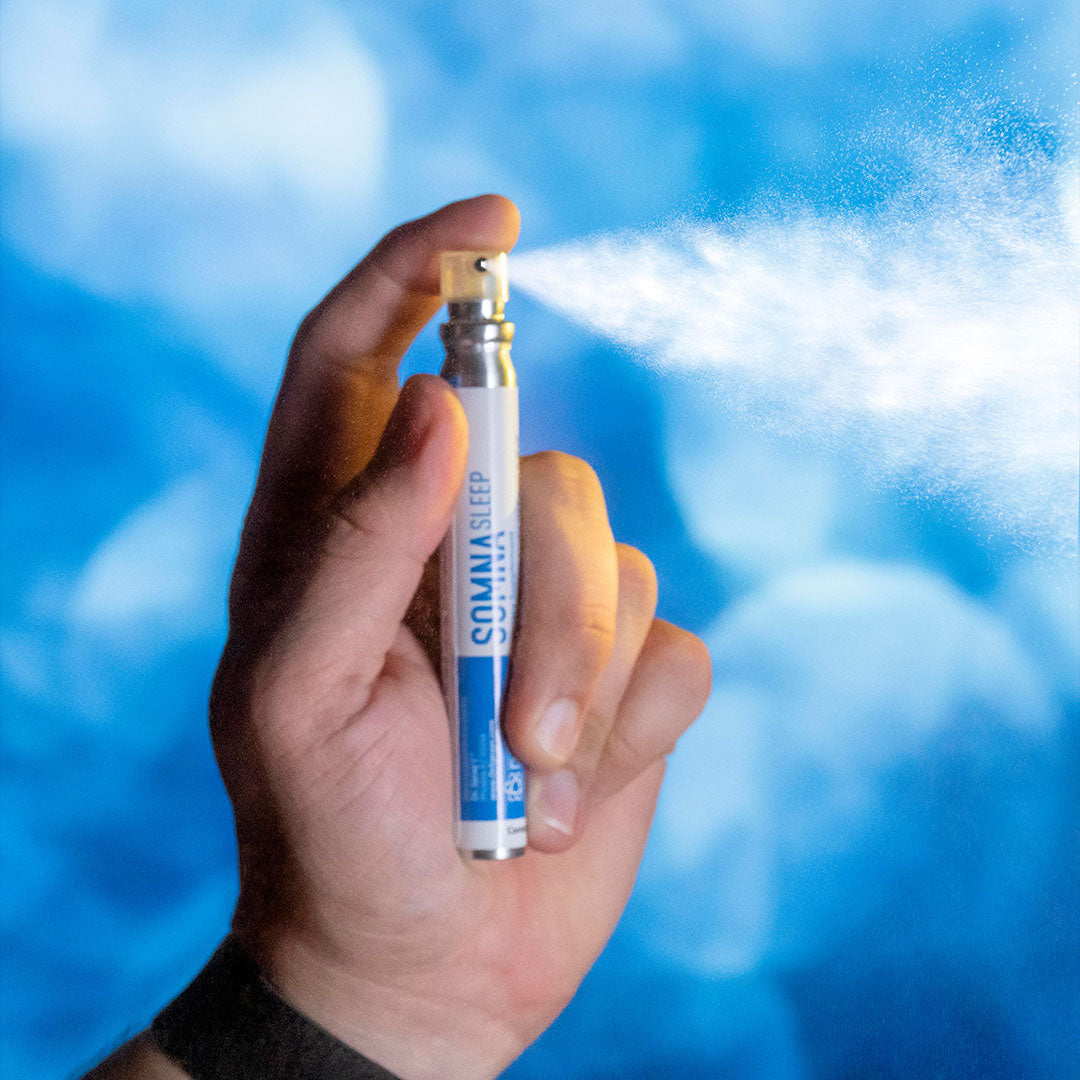
A spray distributes the active across a wide surface of oral mucosa in a fine mist, maximizing contact area for absorption. Compared to a tablet that dissolves in one spot, a well-formulated spray exposes more mucosal tissue to the active at once. Dr. Spray's builds its formulas around this principle with its proprietary Molecular Spray System® — designed to deliver each dose in a format compatible with oromucosal uptake. Products are manufactured in a GMP-certified facility in Phoenix, AZ under the guidance of founder Dr. Clive Spray.
Not every supplement benefits from sublingual delivery. Minerals like calcium, fiber, and protein powders don't absorb meaningfully through the oral mucosa. But for the small molecules that do — melatonin, B12, D3, magnesium compounds, and select herbals — the sublingual route is a legitimate and well-studied alternative to swallowing a pill.
Practical Tips for Getting the Most From an Oral Spray
- Spray under the tongue and hold for 30–60 seconds before swallowing.
- Avoid eating or drinking for 10–15 minutes before and after dosing.
- Store at recommended temperature — heat can degrade sensitive actives like D3 and B12 forms.
- Shake if the label instructs — some formulas suspend lipophilic actives.
For a deeper dive on how this changes the liver/kidney load, see our article on sublingual vitamins and the liver and kidneys. If you're specifically looking at sleep applications, read does sublingual melatonin work better.
Frequently Asked Questions
How long does it take for a sublingual spray to absorb?
For suitable molecules, meaningful absorption starts within minutes, with peak levels typically reached in 15–45 minutes depending on the compound and formulation.
Is sublingual better than swallowing for all vitamins?
No. Sublingual delivery is meaningful for small, mucosa-permeable actives. For bulk minerals (calcium, iron, fiber), standard oral forms remain appropriate.
Does the spray still work if I swallow right after?
Some of the dose will be swallowed and absorbed through the gut, but you lose the sublingual advantage. Hold under the tongue as directed.
Can sublingual sprays replace injections?
For some nutrients like B12, research suggests sublingual can approach injection efficacy. For others (large biologics, insulin), sublingual is not a substitute.
Are oral sprays safe for daily use?
At label-recommended doses, the delivery format itself is well tolerated. The safety profile depends on the active ingredient, not the spray mechanism.
What is the Molecular Spray System®?
It's Dr. Spray's proprietary formulation and delivery approach designed to produce a consistent, mucosa-friendly mist for sublingual absorption. It's how the full Dr. Spray's catalog is manufactured in its GMP-certified Phoenix facility.
Explore Dr. Spray's Sublingual Range
Developed by Dr. Clive Spray and built on the Molecular Spray System®, Dr. Spray's offers sublingual formulations for sleep, energy, immune support, and everyday vitamins.
Shop the full Dr. Spray's range →
Educational content only, not medical advice. Consult a clinician before adding supplements to your routine.